The situation
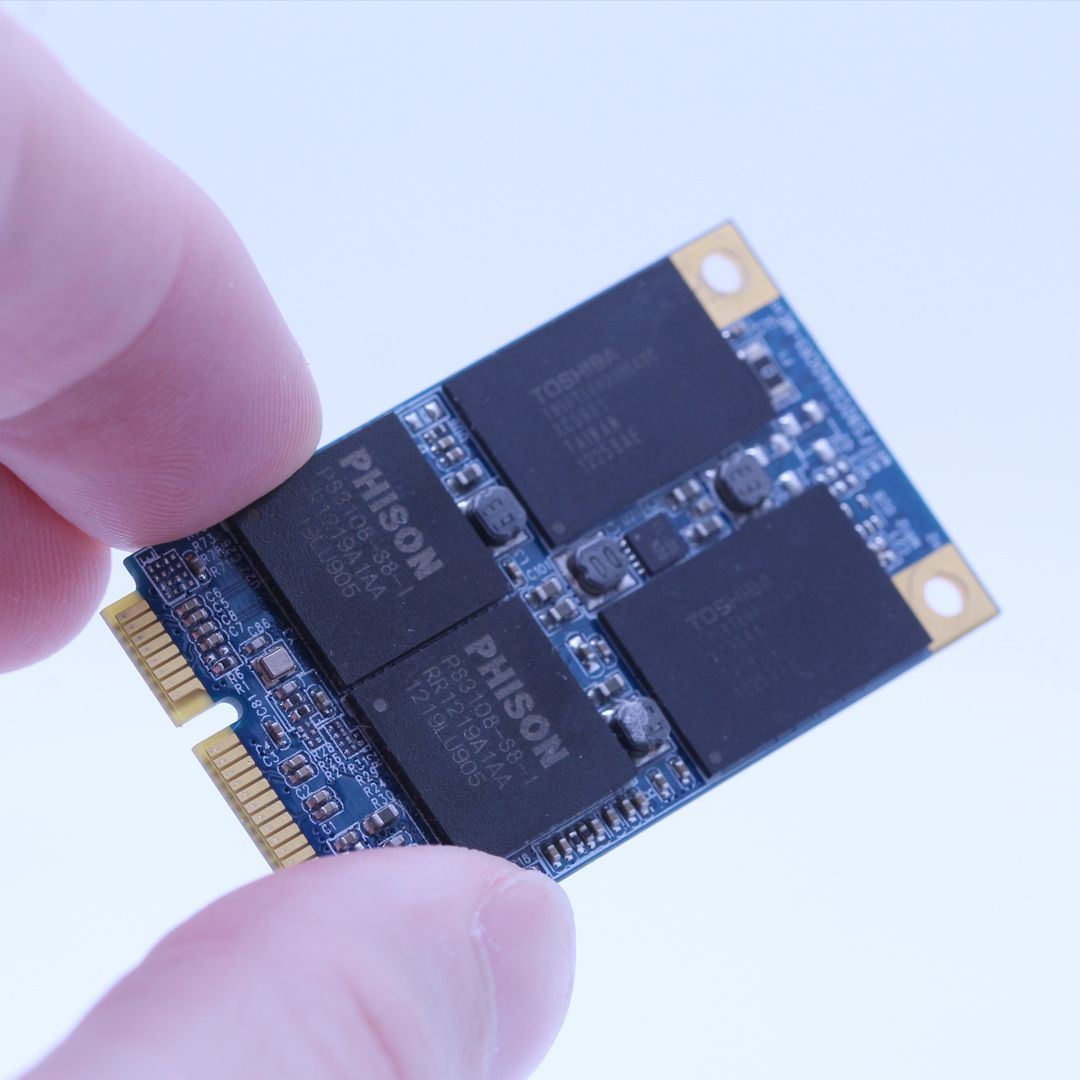
We never cease to be amazed at the devices PC component manufacturers are capable of producing. Take, for example, the SSD from manufacturer Phison, designated SSE128GTTCR-S80. This drive was installed in a laptop that had stopped working. The customer therefore removed the SSD with the aim of retrieving the stored data using a USB-port adapter.
There is nothing unusual about this approach — both an advanced user and an ordinary computer service can manage it. The problem arose the moment the USB adapter with the drive was connected to another computer:
- The drive appeared in the operating system as uninitialized
- None of the required data was visible
The customer assessed the situation correctly and contacted our laboratory.
Diagnostics — first impression
At first glance the delivered drive already looked unusual:
- Two control processors
- Four memory chips
- Two RAM modules
Such a configuration is not common on an mSATA drive.
The finding — two sub-SSDs
On closer inspection we discovered that the drive in fact consists of two separate sub-SSDs:
- The first (primary) sub-SSD — accessible on the standard contacts defined by the mSATA standard
- The second (secondary) sub-SSD — accessible on the reserved contacts, which are normally neither used nor wired up
Once we had identified the individual SATA data lines, we were able to read the contents of both partial sub-SSDs separately.
Reconstruction — RAID 0 with no documentation
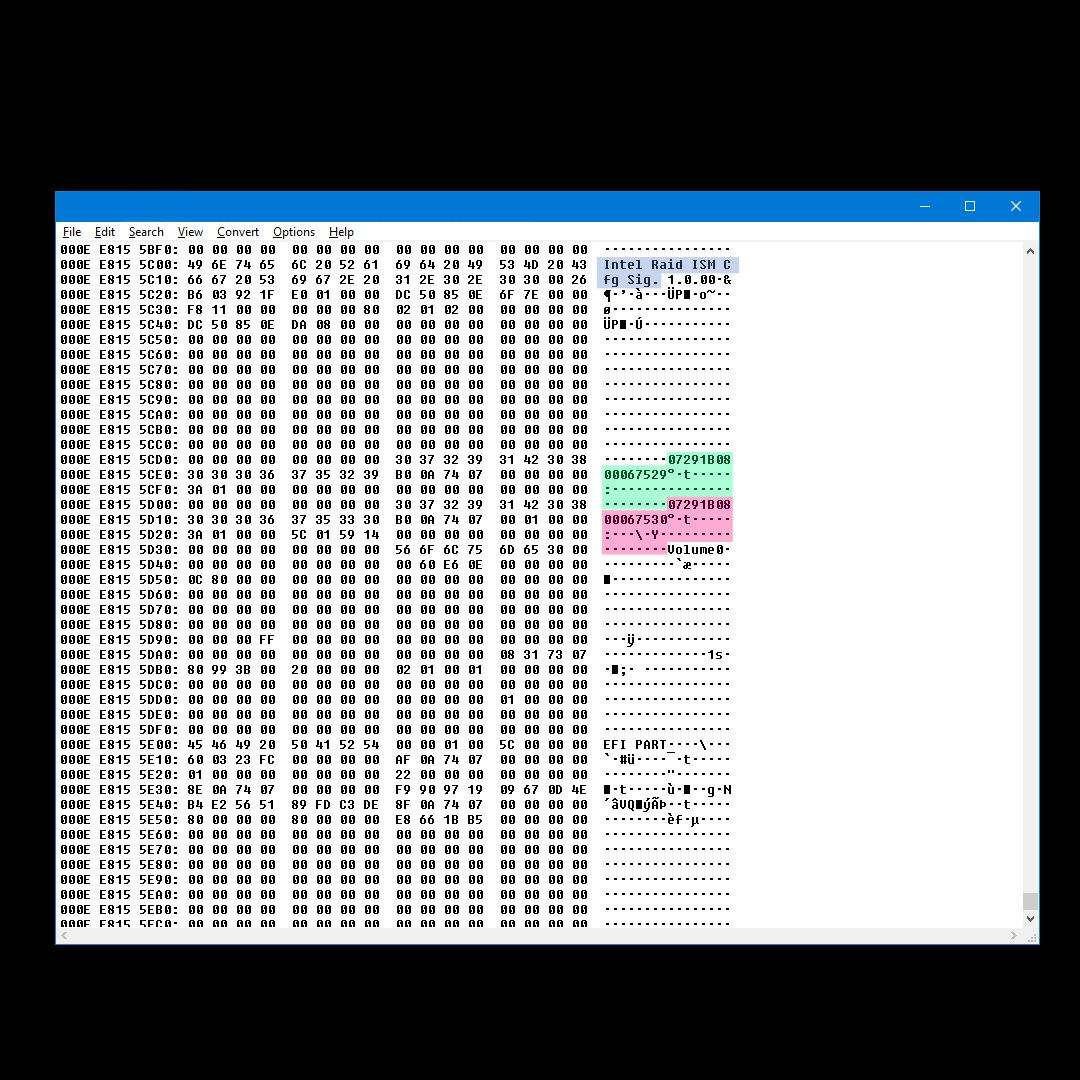
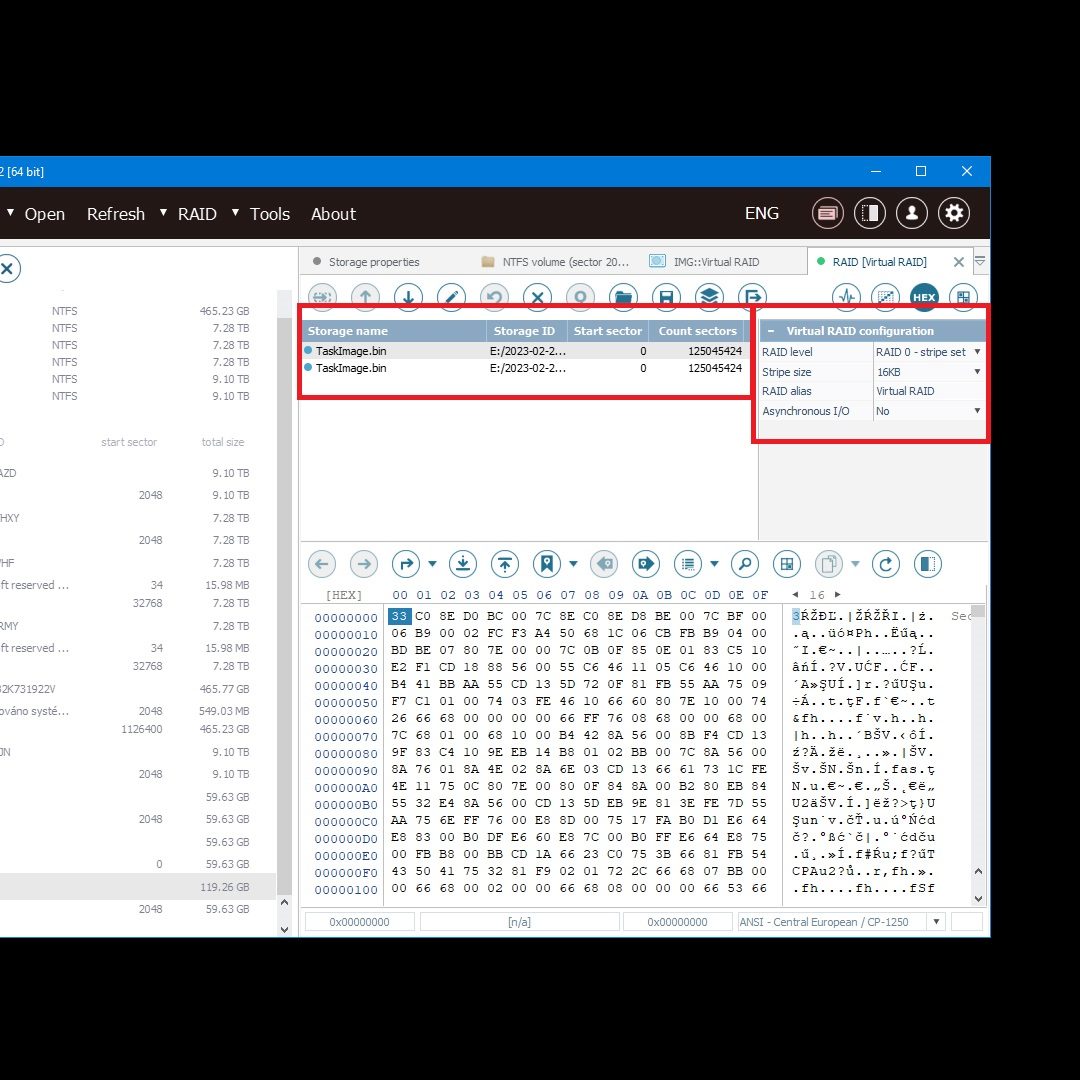
But the recovery was far from over at that point. The two retrieved data blocks had to be combined into a single whole. Through deeper analysis we found:
- The data was managed as a RAID 0 array (striping) across both sub-SSDs
- By analyzing the metadata we determined the array geometry — stripe size, drive order, offsets
Only after this step did we gain access to the complete folder and file structure.
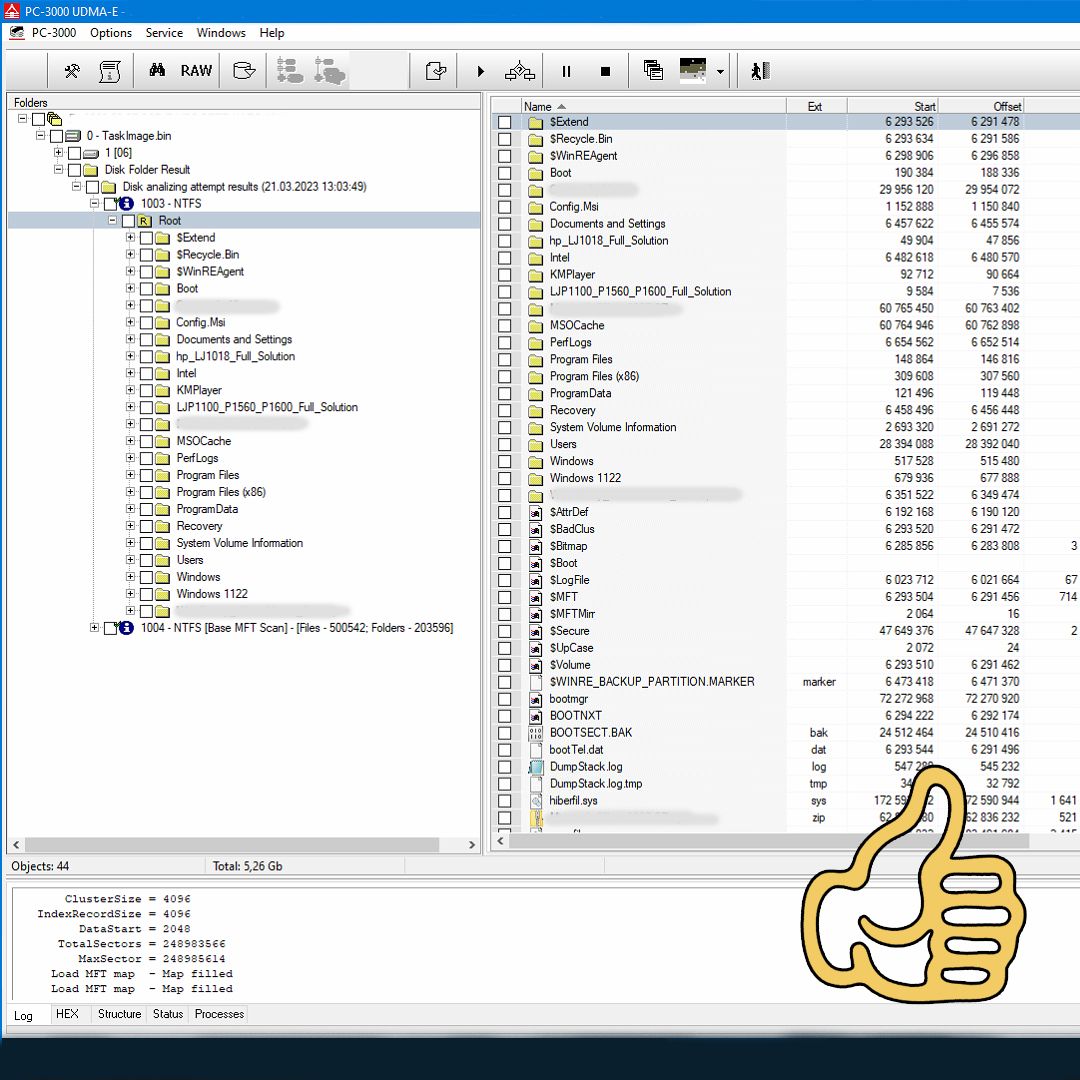
The result
- 100% of the data recovered
- 5 days of laboratory work, including metadata analysis
- Complete file structure — no damaged indexes
The lesson
Although some data recovery cases may at first glance seem trivial, the opposite may be true. And so it holds once again that data recovery is a highly specialized activity, requiring a broad range of knowledge and experience.
Atypical designs (RAID within a single drive, proprietary Synology SHR formats, integrated NAND in MacBook T2/M1) are becoming ever more common today. Ordinary recovery programs cannot handle them — and a client who found themselves in the „an ordinary USB adapter won’t help" situation would not have been able to reach their data without our laboratory.
Do you have an atypical drive or SSD with data on it? For selected HDDs and SSDs, the first indicative diagnostic is normally free. Recovery enquiry · +420 775 556 063