Quick summary
Local AI is a company assistant that runs outside the public cloud and works over data you allow it yourself. Typically this means internal guidelines, contracts, technical sheets, price lists, a knowledge base, service history, or documents from shared storage.
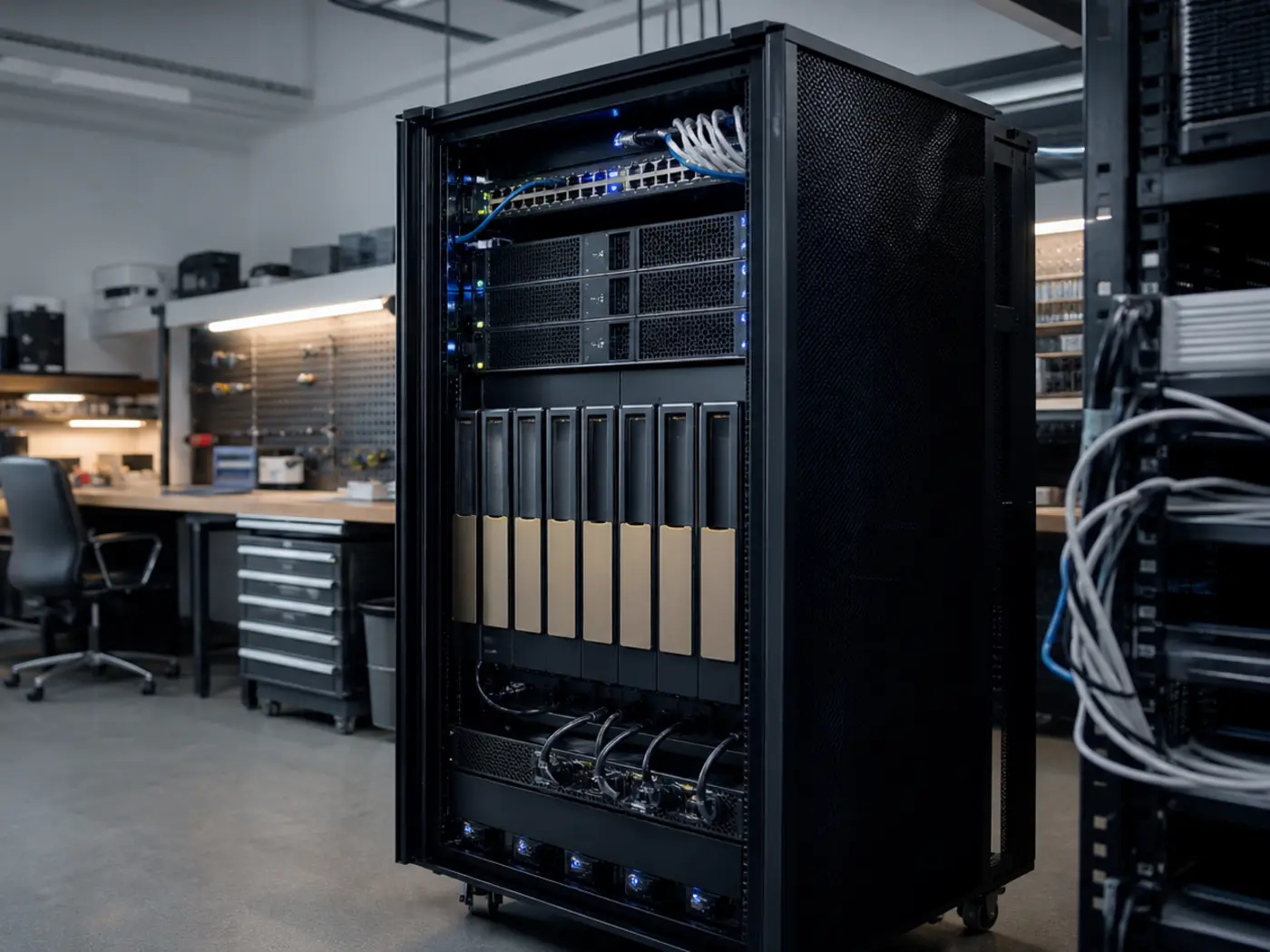
- Sensitive data does not go to a public AI cloud — the model runs on dedicated hardware at your premises or at ours in Brno.
- Answers are based on your documents — through RAG we connect the model to approved sources, not to random knowledge from the internet.
- Access can be controlled and audited — a user sees only the data they are authorised for.
- We start with a pilot — first we verify the benefit on a small scale, and only then does building full operation make sense.
- We will also say no — if a cloud tool is enough for your use case, we will not sell you an unnecessary server.
What local AI is and how it differs from the cloud
When you use cloud AI services in the usual way, you send the prompt, attachments, and part of the context to the provider’s servers. For marketing copy or general research that may be fine. But for contracts, HR documents, patient data, manufacturing know-how, or internal pricing, a company often needs tighter control.
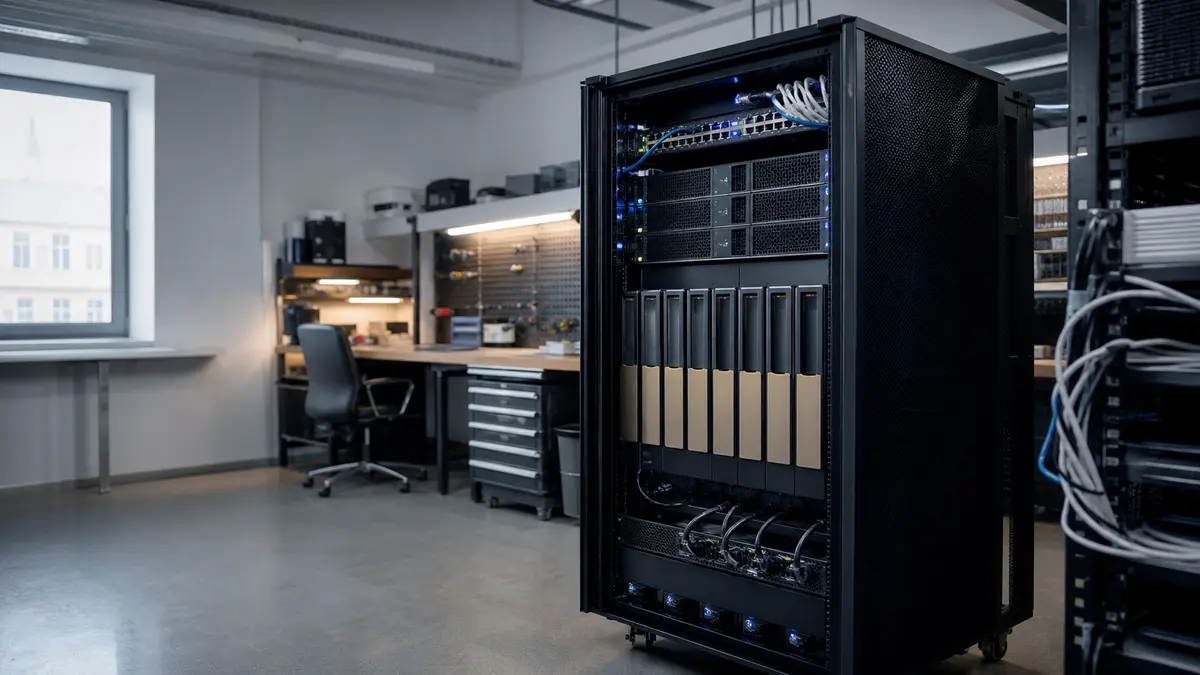
Local AI means the model runs on dedicated hardware. The server can sit in your network, or we can operate it as a separate instance on our GPU servers in Brno-Židenice. What matters is that company documents do not leave for a third party’s public API, and the architecture can be described, secured, and documented.
The difference is not only technical. Responsibility, the security model, and the economics of operation all change. With local AI you know where the data sits, who has access to it, how it is backed up, when it is deleted, and how an incident is handled. At a higher volume of queries, running on your own hardware can also be more predictable than ongoing API payments. We cover the costs in more detail in the article How much AI costs for a company.
Who it pays off for
Local AI makes sense where data represents a competitive advantage, contains personal data, or is subject to regulation. It is most often considered by companies that want to give people fast search and summarisation of internal information, but do not want to send documents outside a controlled environment.
- Management and sales — fast search across contracts, quotes, price lists, and the history of working with a customer.
- HR and administration — finding your way around guidelines, recruitment materials, training, and internal rules.
- Manufacturing and service — queries over technical documentation, procedures, protocols, parts catalogues, and service history.
- Healthcare and regulated fields — working with documents where the location of processing and access must be strictly controlled.
- IT and security — an internal knowledge base, incidents, configurations, operating procedures, and audit materials.
By contrast, where people work mostly with public information, write general text, or handle routine e-mails with no sensitive data, an off-the-shelf cloud tool is often enough. Local AI is worth addressing only once you need control over the data, a connection to internal sources, or a larger volume of regular use.
What local AI can do in practice
A good deployment does not begin with the question „which model should we buy". It begins with a task that hurts the company today. The model alone will not fix a process, but it can significantly speed up working with information.
- Company search without copying documents into the cloud. A user asks in plain language and the model answers from internal documents the person is authorised to see.
- Summarising long documents. Contracts, protocols, minutes, and technical materials can be quickly condensed into decision points.
- An assistant for customer support. The operator gets a suggested answer from the internal knowledge base, but a person approves the final reply.
- Preparing materials for sales and service. AI finds the relevant history, parameters, procedures, or a previous solution to a similar case.
- Checking the consistency of internal rules. It flags contradictions between guidelines, templates, and current procedures.
We do not sell the idea that AI should decide instead of people. In a company environment it makes the most sense as a fast search engine, summariser, and drafting assistant, with a person staying in the loop.

What a secure architecture looks like
Local AI is not just a model downloaded onto a server. For a solution to hold up in a company, it must have clearly defined data sources, access, logging, and operational responsibility.
The foundation consists of four layers:
- Data layer — the documents, folders, knowledge base, databases, or internal systems the model is allowed to use.
- Index and RAG — from the documents we build a searchable index so the model answers from the relevant parts of your data and does not have to „guess".
- Model and application layer — the chosen language model, a web interface, an API for integrations, and rules for prompting.
- Operational layer — sign-in, roles, audit, monitoring, backups, updates, and an incident procedure.
With sensitive data, it is important not to create one big pile of documents. We separate the sources by authorisation and set things up so that, for example, a salesperson does not see HR documents and a service technician does not see contractual margins. This is a more common problem than the choice of model itself.
How we deploy local AI
Deployment should not begin with a six-month project. We start with a pilot that quickly shows whether AI really helps on your data and where the limits are.
- We select one to three specific use cases. For example, searching guidelines, summarising contracts, or an assistant for service procedures.
- We map the data and the risks. Where the documents sit, who owns them, what authorisations they have, and what must not go into the model.
- We propose hardware and a model. Based on the volume of data, the Czech language, the required speed, and the number of users, we choose a sensible configuration.
- We build a pilot RAG. We connect an approved sample of documents, set up access, and prepare test scenarios.
- We measure the quality of answers. We track accuracy, source traceability, speed, error rate, and the practical benefit for the team.
- We decide on operation. Only after the pilot do we recommend whether to continue locally at your premises, on our dedicated hardware, or rather to choose cloud/hybrid.
What you gain
The main benefit is not „we have our own AI". The main benefit is faster work with company knowledge without sensitive context leaking out of the company in an uncontrolled way.
- Less manual searching. People ask internal knowledge in plain language instead of trawling through folders and old e-mails.
- Better control over data. You decide which sources are indexed, who may use them, and how long logs are kept.
- Easier process evidence. For an audit, you can describe the location of processing, access rights, backups, and responsibilities.
- More predictable operation. The server and model are not dependent on changes to the terms of a public AI service.
- The option of offline or isolated mode. For selected scenarios, the solution can run even without a direct internet connection.
What to watch out for
Local AI is not a magic box and is not automatically better than the cloud. If done badly, you merely move the problem from an API invoice into your own operation.
- Data quality decides. Outdated guidelines, duplicates, and poorly described documents will lead to poor answers even on the best server.
- Permissions must be resolved in advance. The model must not see more than the user who is asking.
- Someone has to handle operation. Updates, monitoring, backups, GPU capacity, and incidents need a responsible administrator.
- AI can answer inaccurately. For important outputs, human control must remain, ideally with links to the source documents.
- Not every task needs a local model. For simple public text or one-off use, the cloud often wins.
How much local AI costs
The cost depends mainly on hardware performance, the number of users, the size of the document base, the required answer speed, and the scope of integrations. An internal assistant for ten people needs a different configuration from a system connected to several departments with regular load.
In practice, the budget is made up of several parts:
- Pilot and analysis — selecting use cases, data, security requirements, and test scenarios.
- Hardware or dedicated operation — a GPU server at your premises, or capacity on our dedicated hardware.
- Implementing RAG and integrations — indexing documents, permissions, a web interface, and connections to internal systems.
- Management and maintenance — monitoring, updates, backups, capacity planning, and user support.
That is why we do not set a price from behind a desk based on a fashionable model name. First we find out what AI is really meant to solve and compare the local option with the cloud or hybrid operation. If the cloud comes out safer and cheaper, we will say so.
Why ITHOPE
We build our offer on what we actually have — our own hardware, people, and 18 years of operation.
- Our own lab and GPU servers in Brno — we are not just resellers of someone else’s capacity. We manage the hardware, know its limits, and can service it.
- 18 years of operating IT infrastructure — servers, networks, backups, security, and endpoints are things we have handled long term. We add AI into an existing operational framework.
- One partner for both model and infrastructure — you do not have to work out who is responsible for the server, who for the network, who for the model, and who for user support.
- A practical pilot instead of big promises — we start small and measure whether the solution makes business and security sense.
- A human in the loop — we set up procedures, train the team, and for important processes leave the final responsibility with a person.
When local and when cloud
Not every company needs its own AI server. If you work mainly with public data, do not need to guarantee the location of processing, and want to start quickly, the cloud is often the right choice. We recommend local AI where data is the core of the business, where you need to control access by role, or where a leak of documents would mean real damage.
A hybrid approach often comes out best: handle ordinary tasks in the cloud and keep sensitive documents and the internal knowledge base local. What matters is having clear rules about what may go where.
Not sure which option is right for you? Local AI is part of our broader offer of AI deployment in a company. Get in touch for a consultation — we will go through your documents, risks, users, and budget. Together we will decide whether the cloud, a local server at your premises, our GPU infrastructure in Brno, or a combination of both makes sense.